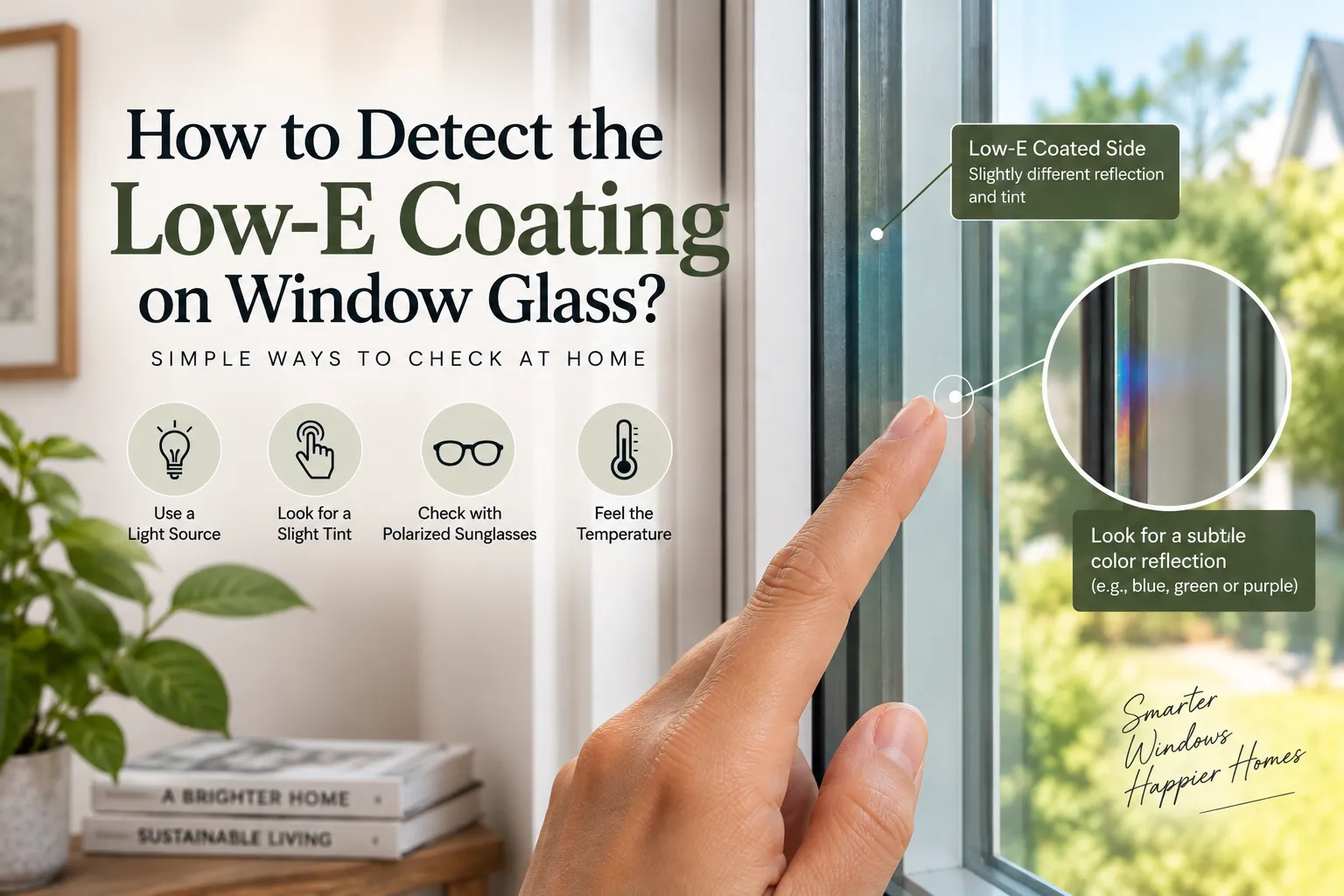
Windows play a vital role in maintaining an ideal temperature indoors. But the question is how? Window glass has a coating that reflects heat back. Once such a layer is Low-e. Low-e (low-emissivity) glass is widely used in modern homes. Such glasses have a microscopically thin coating that improves energy efficiency by reflecting heat while allowing visible light to pass through, helping keep the space warm in cold months and cool in warm months. However, most of the homeowners find it difficult to locate the Low-e side of the glass, even though the correct side affects overall performance and can matter more depending on your climate. This blog explains everything about Low-e glass, its properties, and some simple ways that can help you find the Low-e side of the glasses.
What is a Low-E Glass?
Low-e in glass stands for low emissivity, which means a very thin coating applied to a glass surface within a glazing unit, usually on the interior side of the outer pane in double-pane windows. This coating is made of metallic particles that reduce heat transfer by reflecting infrared light while still allowing visible light to enter the home. If you're using a heater in your home, it helps reflect the heat back inside, reducing heat loss in winter and helping manage solar heat in summer.
Properties of a Low-E Glass
Properties of a Low-e glass are discussed below:
- It is proficient at reflecting infrared rays, meaning it can directly reflect far-infrared radiation.
- Low surface emissivity E absorbs very little external heat and, as a result, radiates very little thermal energy, so it reradiates less heat than a high emissivity surface.
- It helps control solar heat gain by limiting how much solar gain passes through the glass depending on the region, and solar heat gain coefficient is a common metric for this.
This also improves insulation and thermal performance, which can help reduce energy use.
How to Identify Which Side of Glass is Low-E?
Use a Match/Lighter/Pen Light
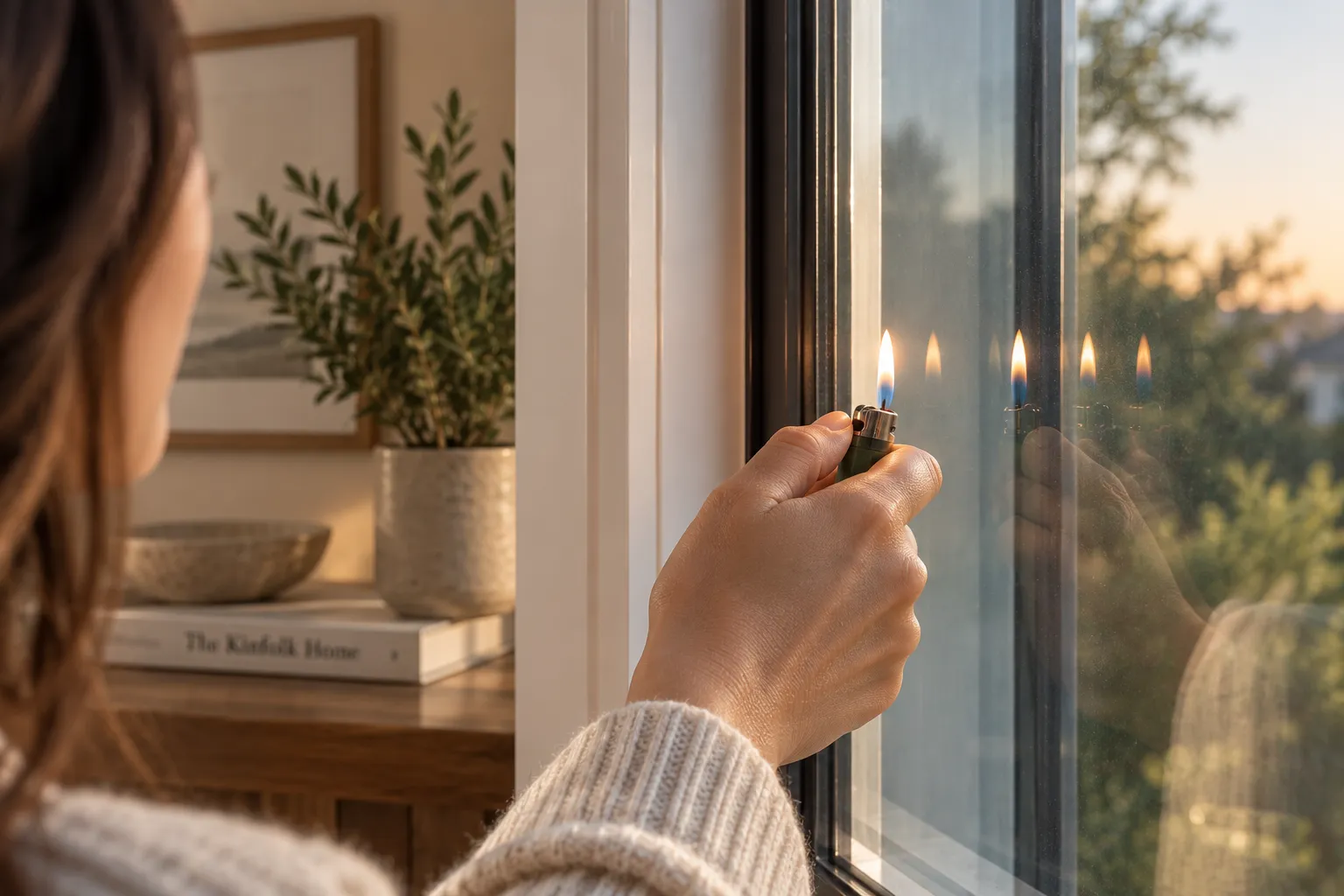
The easiest way to distinguish the flame colors and identify the Low-e side of the glass is to use a lighter. This is commonly called a flame test, and you can also use a match or a penlight. All you have to do is place the lighter close to the window glass and keep an eye on the four reflections of the flame, since double-pane windows have four glass surfaces and two surfaces per pane visible in reflection. If any of the four reflections seem to be a different color, often on the inner pane and only slightly different, it indicates a Low-e coating on your window. That color shift helps confirm that a coating exists on the coated surface.
Bright Spotlight Indication
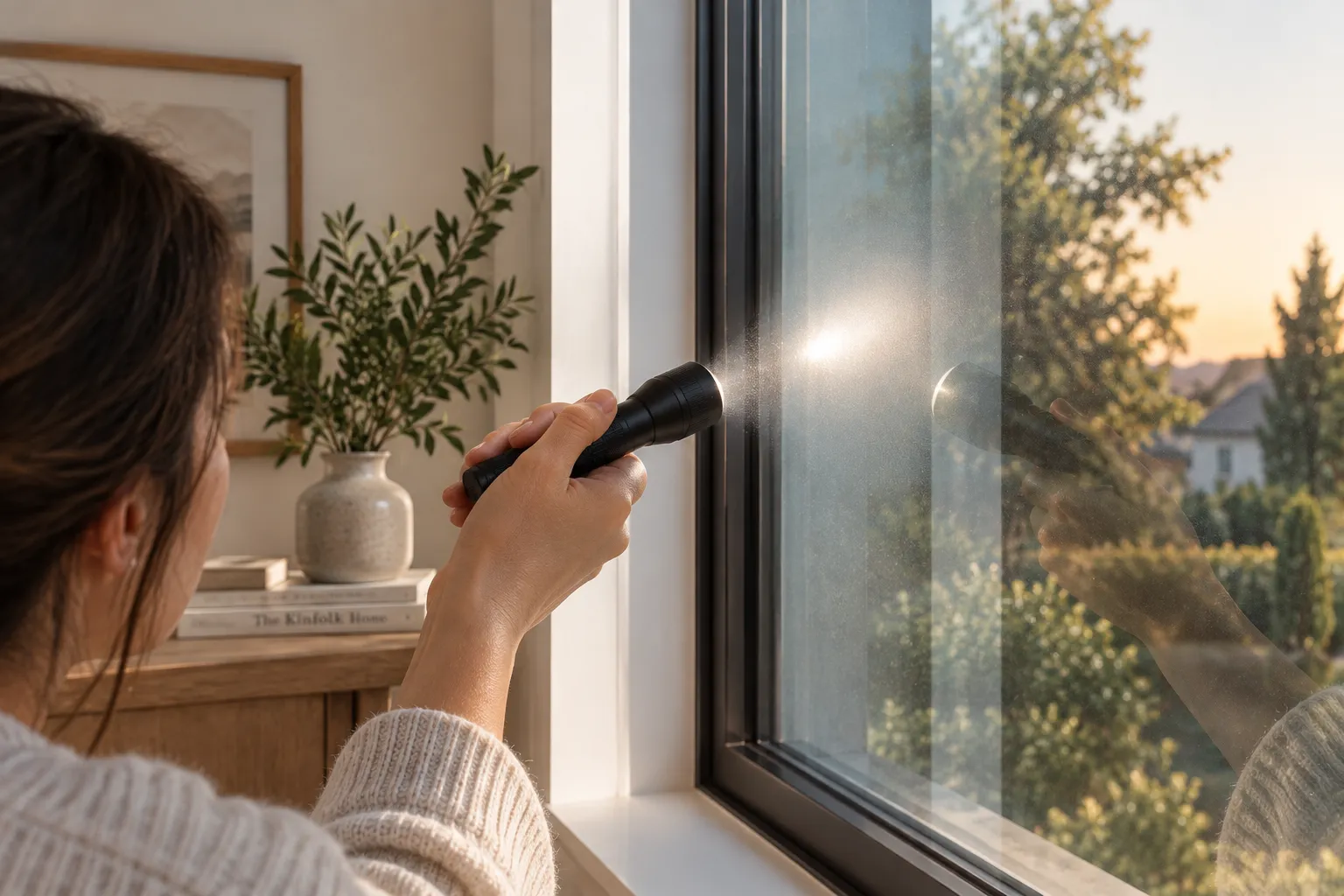
If your glass shows a very bright spotlight that strikes the glass obliquely, it indicates that the Low-e side is on the outer side of the pane; compared with clear glass, Low-E can look slightly milky at an angle. The inner surface of the glass pane appears a bit milky. This is also an easy way to find out the Low-e side of a glass.
Fingerprint Test
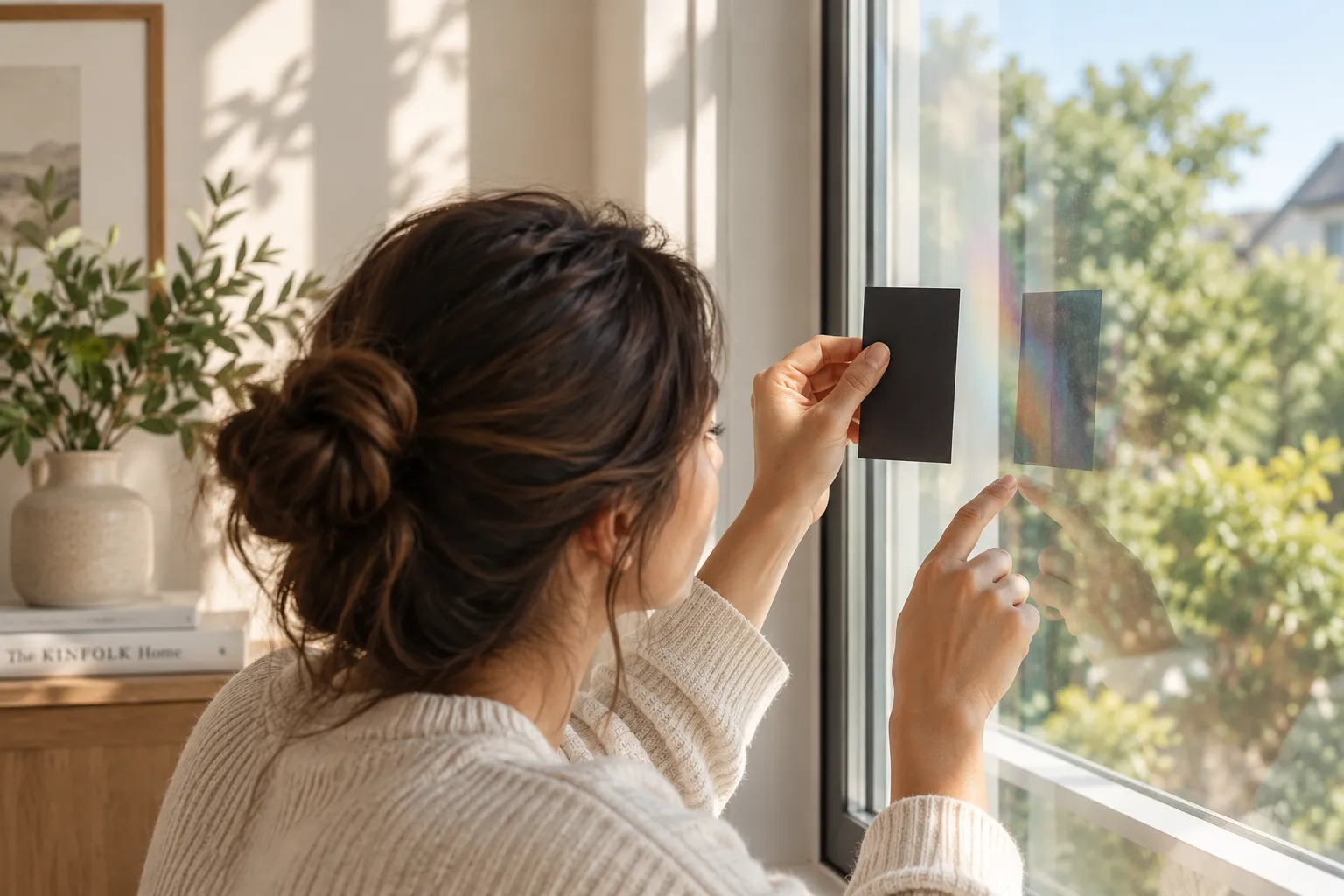
Put your finger on the outer pane of the glass of your window and look for a dual reflection of your finger. If you find a secondary reflection of your finger, it indicates that your glass has a Low-e coating.
Reflection Test
Another easy way to find out the Low-e side of your glasses is to do a reflection test. This process is somewhat similar to the spotlight indications test, which was already explained in this guide. To find out whether your window glass is Low-e, turn on your cellphone flashlight and hold it up to the window. Four reflections of light will appear in a double-pane insulating glass unit. This happens because a double-pane insulating glass unit has four glass surfaces, and the coating is often sealed inside rather than exposed. If your window has a Low-e coating,then one of the four images will have a different color. That confirms a Low-e coating exists, though it does not identify the coating type. However, if all four reflections are of the same color, then the window doesn't have a Low-e glass coating.
How a Low-E Glass Function in Summer And Winter?
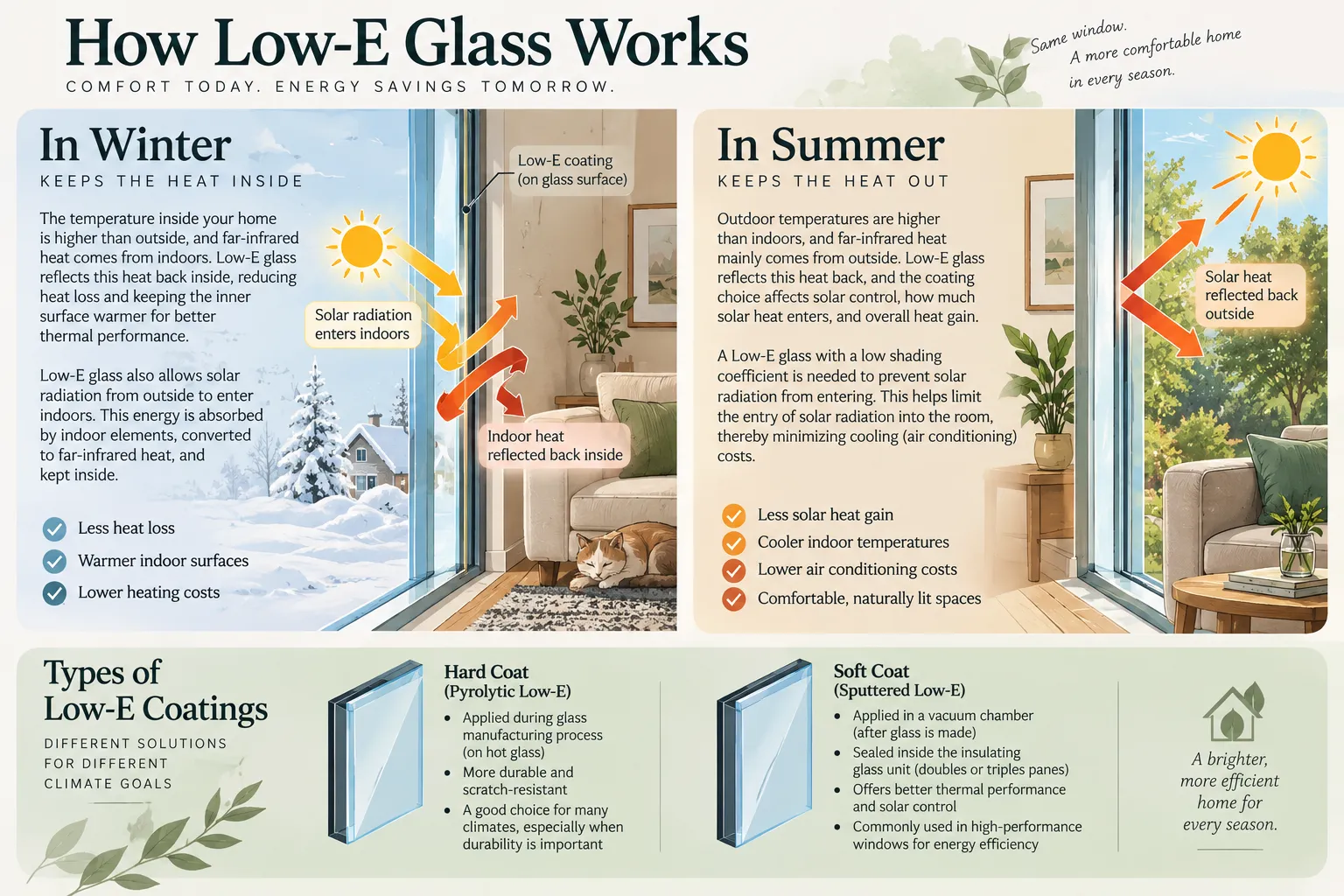
In winter, the temperature inside the home is higher than outside, and the far-infrared heat comes from indoors. In cold climates, a Low-e glass reflects this heat back inside, reducing heat loss and warming the inner surface for better thermal performance. Additionally, Low-e glass allows solar radiation from outside to enter indoors, and this energy is absorbed by indoor elements. This heat energy is then converted to far-infrared heat and left inside.
In summer, outdoor temperatures are higher than indoor temperatures, and far-infrared heat radiation mainly comes from outside. In hot climates, Low-e glass reflects this heat back, and the coating choice affects solar control, how much solar heat enters, and overall heat gain. Low-e glass with a low shading coefficient is needed to prevent solar radiation from entering. This will help limit the entry of solar radiation into the room, thereby minimizing cooling (air conditioning) costs.
Different types of low e use different coating type options depending on climate goals: hard coat is more durable, while soft coat is applied in a vacuum chamber and sealed inside the glazing unit for better thermal performance.
Conclusion
A Low-e side of a glass can be easily identified using simple techniques such as a match, a lighter, a penlight, a spotlight, a finger test, or a reflection test. Detecting the Low-e side of the glass has various benefits for your house, including lower cooling costs and reduced energy use. The Low-e side reflects back UV rays of the sun and controls the transfer of solar energy. In winter, Low-e glass prevents indoor heat from escaping, while in summer, it reflects heat back so your interior stays cool. Therefore, indicating the Low-e side and setting it up properly will enhance daily comfort year-round, and it is best to confirm the orientation before installation while the unit is still on the floor, since fixing it later can add cost.