Peace lilies are well-known for their beautiful and delicate white blooms. They may require minimal care, but with the right fertilizer, one can keep the plant growing and healthy for a long time.
However, it is important to know the right time to fertilize a plant and the type of fertilizer to use. Different houseplants have different nutritional and environmental needs. For example, learning how to care for orchids indoors can help plant owners understand why fertilizer schedules should be adjusted according to a plant's growing conditions. In this guide, you will learn everything you need to know about fertilizer for peace lilies.
When to Fertilize Peace Lily?
The first crucial step is to identify the right time to fertilize your peace lily before picking up the fertilizer. Fertilization at the wrong time can cause more harm than good.
Right Time to Fertilize
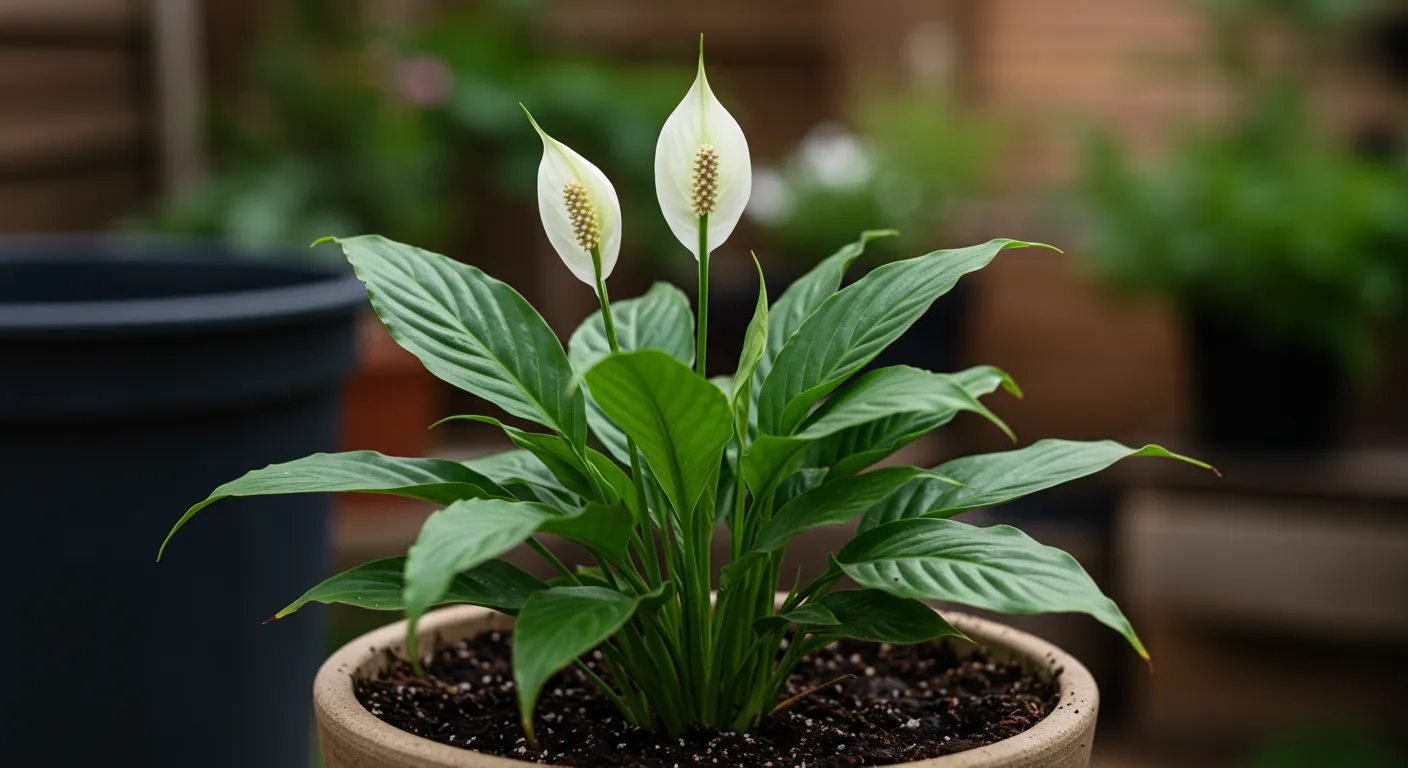
The ideal time to fertilize peace lilies is when they actively grow. The growing season usually comes from spring to early fall. As per the plant experts, giving a light dose of fertilizer after every four to six weeks during the growing season is considered to be perfect for peace lilies. This helps in keeping the lily plant healthy and promotes adorable blooms.
While establishing a regular feeding schedule, pay attention to changes in the plant's leaves and stems. Yellowing foliage can sometimes indicate a nutrient, watering, or environmental problem rather than simply a need for more fertilizer. Similar symptoms can occur in other houseplants, such as when asking why is my bamboo plant stalk turning yellow.
Wrong Time to Fertilize
Winter is not the ideal season for peace lily fertilization. During this season, their growth naturally slows, so they don’t need extra nutrients. It is suggested not to fertilize lilies when the plant is in a resting phase or when the growth slows down. Doing this can overload the soil, which can further cause problems like soggy soil, root rot, drooping leaves, or even yellowing foliage.
Two Best Fertilizers for Peace Lilly
Slow-Release Fertilizer
Slow-release fertilizer is the bright specks you sometimes see in soil. It comes in small, colorful pellets, which are mostly present in the potting mix. Since these pellets release minerals into the soil over several months, you only need to add the fertilizer every few months.
However, slow-release fertilizer has one drawback: you lack control over the rate at which the pellets dissolve. The amount of nutrition a plant gets is also unpredictable. If they dissolve rapidly, the plant gets excess fertilizer, which eventually causes yellow leaves and burnt roots. Slow release is not good either, as the plant may not get enough nutrients, which can further weaken the growth. Therefore, it’s best to monitor the plant’s condition regularly.
Liquid Fertilizer
Liquid fertilizer is liked by many users because it is simple to use. It allows you to control the amount of nutrition a plant receives. By mixing a small amount of it with water, one can easily water the plants without any problem.
However, liquid fertilizer also comes with some complexity. For example, it consists of different schedules. Some of them need to be applied every 3 weeks, some are used once a month, and some are used every month. This can make it difficult to track when the last dose was given and when the next one is due.
What is the NPK Ratio in Fertilizer?
The NPK stands for nitrogen (N), phosphorus (P), and potassium(K). While buying the fertilizer for peace lilies or any other plant, it is crucial to check the NPK ratio on the label. The NPK is shown as three numbers like 3-1-2 or 20-20-20. For peace lilies, the balanced fertilizer or one with slightly more nitrogen works well as it promotes healthy, green leaves and overall plant growth.
The same principle of avoiding unnecessary supplementation applies to other flowering houseplants. For instance, gardeners may wonder do hibiscus plants like coffee grounds before adding household materials to their plant-care routine. Understanding the nutritional needs of each species is important because a method that works for one plant may not be suitable for another.
Two Household Items Used as Fertilizer for Peace Lily
Spent Coffee Grounds
Coffee grounds are used to refresh your morning mood, and the spent coffee grounds are used to enhance peace lily growth. They contain special nutrients like nitrogen, which help in promoting healthy green leaves of peace lilies. The best way to use coffee grounds is to mix them into compost and then use that compost to cover the soil. Do not add excess coffee grounds directly to the soil, as it can reduce the availability of nitrogen.
Epsom Salt
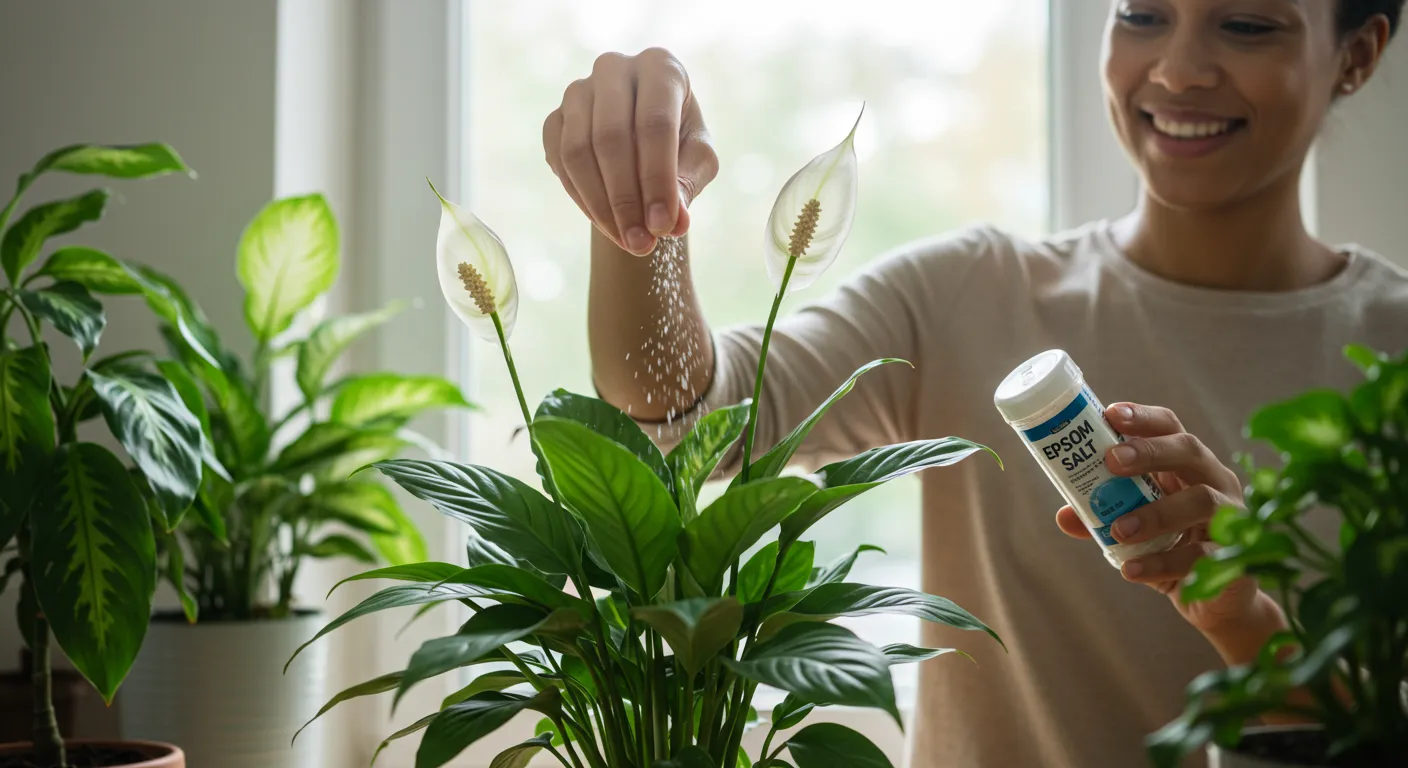
Epsom salt, also known as magnesium sulfate, is used as a fertilizer for peace lilies. It helps create chlorophyll, which is crucial for photosynthesis and overall plant health. A lack of magnesium may cause peace lily leaves to turn yellow, and Epsom salt can help fix this deficiency. However, excess use of magnesium prevents calcium absorption in plants, which affects the smaller leaves and brown edges, further causing harm to the overall plant.
For safety purposes, test the soil first. Mix 2 tablespoons of Epsom salt in a gallon of water and use it to water your plant if magnesium is low. Later, retest the soil before applying it again.
When diagnosing yellow leaves, it is also useful to compare symptoms across different plants rather than assuming fertilizer is always the cause. For example, gardeners researching gardenia yellow leaves vinegar may encounter different causes and treatment approaches because gardenias have their own soil and nutrient requirements.
Conclusion
One can ensure lush greenery and healthy blooms by fertilizing the peace lily appropriately. It is crucial to figure out the right fertilizer, remember the schedule, and follow proper care to keep your peace lily happy and healthy in the long run.
Plant lovers can also expand their indoor collection with plants that have different foliage textures and growing habits. For example, philodendron micans is another popular houseplant option for adding attractive foliage to an indoor garden. Similarly, those growing holiday plants may be interested in sugar water for christmas cactus, but homemade fertilizer solutions should always be used carefully and according to the plant's specific needs.